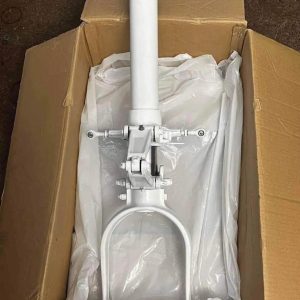
The Cessna Nose Gear Strut Assembly is an important landing-gear component designed to support the forward section of a compatible aircraft during taxiing, takeoff, landing, parking, towing, and routine ground operations.
A Cessna Nose Landing Gear Strut may form part of a broader Cessna Nose Gear Assembly, while the phrase Cessna Landing Gear Strut can describe different positions or configurations depending on the aircraft model.
Clear descriptions help buyers determine whether the listing includes a complete assembly, partial strut, housing, piston, fork, or related hardware.
The Cessna Nose Gear Shock Absorber, Cessna Landing Gear Assembly, Aircraft Landing Gear Strut, and Cessna Nose Wheel Strut phrases highlight the component’s role in supporting loads and controlling ground impacts.
The Cessna Steering Strut Assembly, Cessna Replacement Nose Gear, and General Aviation Landing Gear Parts keywords describe commercially relevant searches for maintenance and restoration projects.
Identifying the Complete Nose Gear Component
The assembly should be identified through its Cessna part number, casting or forging numbers, serial markings, aircraft applicability, dimensions, configuration, photographs, maintenance records, and available illustrated-parts information.
Included items may vary and can involve the strut body, piston, fork, axle, torque links, steering collar, seals, bearings, spacers, hardware, wheel, or tire.
Structural Support and Aircraft Load Management
Actual load distribution depends on aircraft weight, center of gravity, tire pressure, landing technique, surface condition, and aircraft configuration.
Inspection should extend beyond the removable assembly to the mounting areas, firewall or support structure, brackets, steering components, wheel fork, and surrounding fasteners where applicable.
Managing Landing and Taxi Impacts
Complete functional evaluation is more reliable than visual appearance alone.
Qualified maintenance supports proper Cessna Nose Gear Shock Absorber operation.
Nose Wheel Steering and Directional Control
The nose gear may interact with the aircraft steering system through collars, torque links, rods, springs, cables, stops, bushings, or other model-specific mechanisms.
Excessive turning can damage linkage, hoses, fairings, fork components, or internal strut features depending on the design.
Aircraft Model and Serial-Range Compatibility
Model-specific verification reduces unsuitable purchases and installation delays.
Qualified applicability research supports responsible Cessna Replacement Nose Gear selection.
Cylinder, Piston, and Sliding-Surface Inspection
Paint, grease, or contamination should not conceal suspected defects.
Internal wear can result from contamination, damaged seals, misalignment, corrosion, or prolonged operation with incorrect servicing.
Seal Condition and Fluid Leakage
A small film of fluid and an active leak should be distinguished using applicable maintenance guidance.
Professional service supports reliable shock absorption and reduced maintenance recurrence.
Evaluating Coastal and Outdoor Storage Damage
Surface discoloration should be evaluated rather than dismissed automatically as cosmetic.
Protective coatings should be checked for chips, lifting, abrasion, bubbling, poor adhesion, and incompatible refinishing.
Crack, Bend, and Impact-Damage Inspection
Some defects may be difficult to identify without cleaning, magnification, dimensional comparison, or suitable nondestructive inspection.
Transparent impact history supports informed Cessna Front Landing Gear Assembly purchasing.
Maintaining Wheel and Tire Geometry
Fork alignment influences wheel tracking, steering response, tire wear, and clearance around fairings or nearby components.
Wheel bearings, seals, spacers, read more and retaining hardware should be evaluated separately rather than assumed serviceable because they are attached to the assembly.
Preventing Nose Gear Shimmy
Bushings, bolts, washers, bearings, and attachment holes should be inspected for wear, elongation, corrosion, looseness, and inadequate lubrication.
Lubrication should follow the applicable schedule and use the appropriate product.
Understanding Ground Vibration Causes
Operational reports should identify when the vibration occurs and under what taxi or landing conditions.
Measurements and operational checks should support the maintenance decision.
Fluid and Pressure Maintenance
Values from another Cessna model should not be applied without verification.
Repeated pressure loss should prompt leak investigation rather than continual inflation.
Rebuilding a Cessna Nose Gear Strut
An overhaul may include complete disassembly, cleaning, dimensional inspection, crack inspection, corrosion evaluation, seal replacement, surface review, reassembly, servicing, and functional checks.
Reconditioning decisions depend on structural condition, dimensional limits, corrosion depth, surface damage, repair data, parts availability, and cost.
Pre-Purchase Inspection Checklist
Detailed review reduces unsuitable purchases and unexpected overhaul costs.
- Request detailed photographs of the cylinder, piston, chrome surface, fork, axle, mounting areas, torque links, steering collar, bushings, seals, data markings, and included components.
- Confirm total time when known, removal reason, donor aircraft, overhaul history, servicing status, seal replacement, and inspection results.
- Inspect and photograph the assembly immediately after delivery before cleaning, servicing, disassembling, repairing, painting, or installing it.
Preventing Damage to the Piston and Fork
Loose hardware should be labeled, wrapped, and secured separately.
Forks and mounting features should not be used as uncontrolled lifting points unless approved for handling.
Storage and Preservation Before Installation
Responsible storage preserves the future usefulness of the Cessna Nose Strut.
Extended storage may require renewed inspection, seal evaluation, cleaning, servicing, and corrosion review before installation.
Preparing for Ground-Handling Checks
Surrounding structure should be inspected for cracks, corrosion, deformation, worn holes, and previous repair before installing the replacement assembly.
Wheel alignment and steering travel should be evaluated after assembly.
Any abnormal indication should receive prompt evaluation before further operation.
Reducing Landing Gear Wear
Lubrication and servicing should follow the applicable maintenance schedule.
Recurring concerns should prompt system-level evaluation rather than repeated isolated adjustments.
Choosing a Documented Aviation Component
Clean paint may improve presentation but does not replace structural, dimensional, and functional evaluation.
Availability of technical information, replacement parts, and qualified maintenance support can influence long-term value.
Cessna Nose Gear Assembly Conclusion
The Cessna Nose Gear Strut Assembly may suit private aircraft owners, flight schools, maintenance organizations, restorers, aviation dealers, and general aviation operators seeking an identifiable landing-gear component.
Careful technical and commercial evaluation can reduce compatibility problems, missing-parts expenses, overhaul surprises, installation delays, steering concerns, and documentation issues.
Whether buyers need a Cessna Front Landing Gear Assembly, Aircraft Nose Gear Strut, Aircraft Nose Landing Gear Assembly, or Cessna Shock Strut Assembly, current physical condition should be verified.
With responsible purchasing, crack and corrosion inspection, seal evaluation, correct hardware, controlled servicing, and ground-handling checks, the component can remain a valuable aviation asset.